Best Smoothie Powder Supplements UK (2026): What to Buy and Why
There are a lot of powders on the market right now, and if you’ve ever stood in a health food shop staring at a wall of tubs wondering what any of it actually does, you’re not alone. Protein, greens, collagen, adaptogens — each one promises something slightly different, and the packaging rarely makes it easy to figure out which one you actually need.
As an Amazon Associate, I earn from qualifying purchases and sometimes recommend products from other sellers at no extra cost to you. For more details see my disclosure policy and privacy policy.
This guide cuts through all of that. Whether you’re looking to make your morning smoothie more filling, sneak in some extra nutrients, or support your joints and skin, there’s a powder that fits — and a few that probably aren’t worth your money. Here’s what’s actually worth adding to your blender in 2026, with honest thoughts on what each one does, who it suits, and which UK products are worth trying.

First: Which Type of Powder Do You Actually Need?
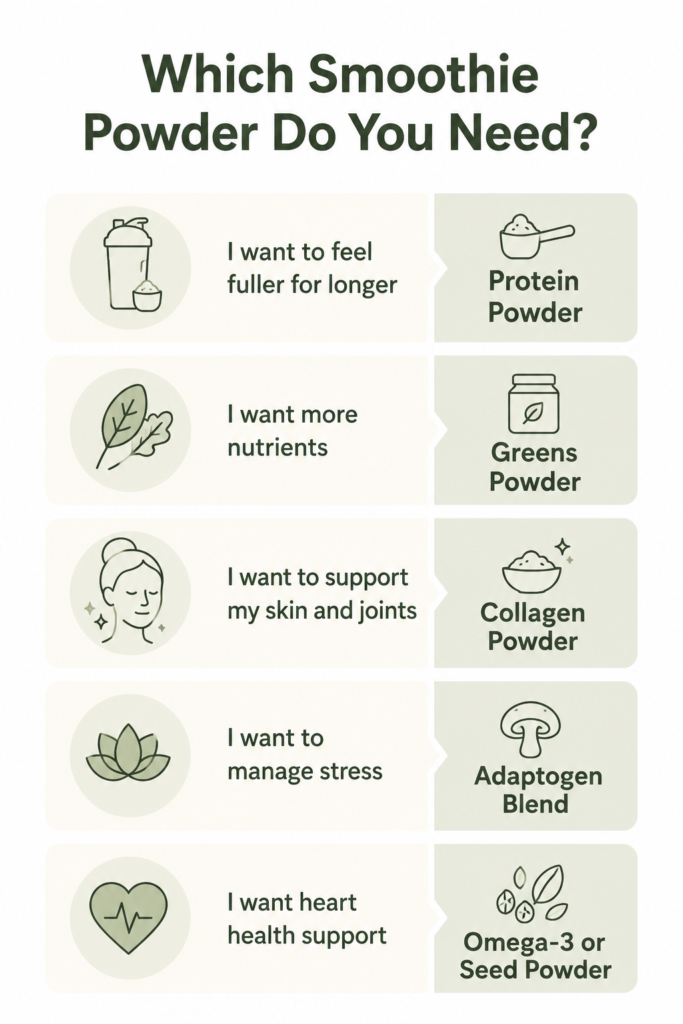
Before buying anything, it helps to know what you’re trying to achieve. The five main categories of smoothie powder each do something different, and stacking all of them into one shake is rarely the answer.
- Protein powder is the right choice if your smoothie tends to leave you hungry by 10am, or if you’re trying to hit a higher daily protein intake without eating more meat or eggs.
- Greens powder is worth considering if your diet is genuinely low in vegetables, or if you want an easy micronutrient boost alongside a fruit-heavy smoothie.
- Collagen powder suits anyone focused on skin, joint, or hair health — though it’s not suitable for vegetarians or vegans, since it’s always derived from animal sources.
- Adaptogen or mushroom blends are for people who already have the basics sorted and want to add something targeted for stress, focus, or energy.
- Omega-3 and seed powders (think chia or ground flaxseed) are a simple way to support heart and brain health, and tend to blend well into almost anything.
Most people only need one or two of these. Start with whichever matches your main goal, try it consistently for a few weeks, and then reassess before adding anything else.
Best Protein Powders for Smoothies (UK)
Protein powder is by far the most popular category, and for good reason — a single scoop can add 20–25g of protein to a smoothie, turning something that would otherwise be a sugary fruit drink into a genuinely satisfying meal. The trick is finding one that actually tastes good blended with fruit and doesn’t turn gritty or chalky.
Myprotein Impact Whey — Best Budget Whey
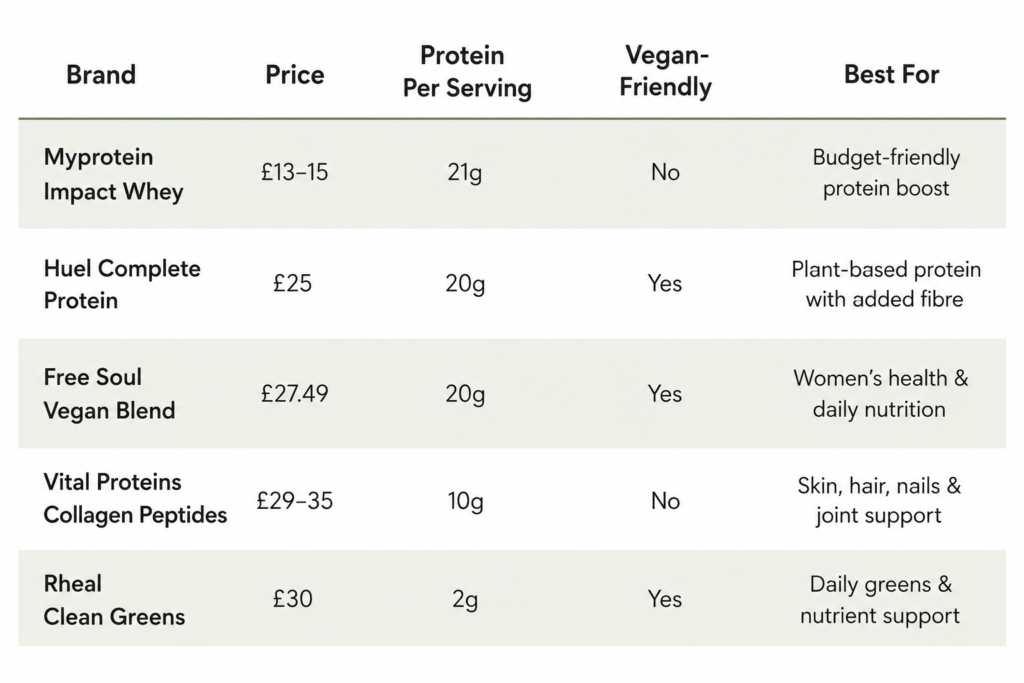
Myprotein’s Impact Whey is the go-to recommendation for most people starting out with protein powders in the UK, and it earns that reputation. It’s widely available, consistently well-priced (especially when Myprotein runs one of its regular promotions), and it mixes smoothly into smoothies without clumping. The Chocolate Brownie and Vanilla Ice Cream flavours both work well blended with banana, and the Unflavoured version is genuinely neutral — you won’t notice it at all in a fruit smoothie.
At around £13–15 for 500g, it’s one of the most cost-effective options on the market. Whey protein isn’t suitable if you’re lactose intolerant or dairy-free, but for everyone else, it’s a reliable starting point. Each serving contains around 21g of protein, which is on the higher end for the price point.
Huel Complete Protein — Best for Smoothies Specifically
Huel’s Complete Protein was actually named the best protein powder for adding to smoothies by Olive Magazine’s food experts in 2026, and it’s easy to see why. It’s plant-based (pea and rice protein), vegan-friendly, and has a flavour profile that pairs particularly well with banana and peanut butter. The Chocolate Fudge Brownie flavour is the most popular, and it adds a rich flavour rather than the slightly chalky aftertaste you get with some plant proteins.
It’s more expensive than Myprotein — around £25 for 750g — but the ingredient quality is noticeably higher, with naturally-sourced fibre from oats and flaxseed rather than added fibre supplements. If you’re dairy-free, vegan, or just want something that feels a bit more considered, Huel is a strong choice.
Free Soul Vegan Protein Blend — Best for Women
Free Soul’s plant-based blend is worth a mention because it’s one of the few protein powders on the UK market formulated with women’s health specifically in mind. As well as 20g of protein per serving, it includes added calcium, biotin, vitamin B6, and B12 — nutrients that women are statistically more likely to be low in. The Chocolate flavour has a pleasant, malty taste and blends smoothly, either on its own or mixed with oat milk and frozen banana.
At around £27.49 for 600g it’s in the mid-range price bracket. As with all protein powders that contain multiple added nutrients, it’s worth checking you’re not doubling up if you already take a multivitamin.
A Note on Added Sugar
One thing worth checking on any protein powder is the sugar content — some products, particularly flavoured ones, can contain 5–8g of added sugar per serving, which adds up quickly if you’re having one every day. Check the nutrition label and look for products that use stevia or no sweetener at all if you’re watching your sugar intake.
Best Greens Powders for Smoothies (UK)
Greens powders are where things get complicated. The quality varies enormously — you can spend £13 or £79 on a product and end up with something quite similar, or something completely different. The ingredient list can range from six items to over ninety, and the taste ranges from “grassy pond water” to “mildly tolerable in a smoothie.” Here’s what’s worth knowing.
AG1 (Athletic Greens) — Best Premium Option
AG1 is the greens powder you’ve probably seen on every health podcast you’ve listened to, and the hype is at least partially warranted. It contains over 75 ingredients including spirulina, chlorella, reishi mushroom, ashwagandha, vitamin C, zinc, and a B-complex — essentially combining a multivitamin, probiotic, and superfood blend in one scoop. The taste, for such a green-heavy formula, is surprisingly manageable — mildly tropical with a hint of vanilla, and it blends well into smoothies without overpowering the fruit.
The obvious downside is the price, which sits at around £79 per pouch (approximately 30 servings). That’s a meaningful spend, and it’s only worth it if you’re genuinely going to use it every day. If you’re looking for a convenient all-in-one, it’s hard to beat — but for occasional use or if you’re already taking separate supplements, it’s hard to justify.
Rheal Clean Greens — Best Mid-Range UK Pick
Rheal is a UK brand worth knowing, and their Clean Greens powder is a standout for people who want a no-nonsense greens supplement without proprietary blends or hidden ingredient doses. The formula is straightforward — spirulina, wheatgrass, barley grass, baobab, and pineapple — and because there are no sweeteners, what you get is quite literally just greens. The taste reflects that. Mixed into water it’s grassy and earthy, but blended into a smoothie with mango or apple it becomes much easier to drink. In a smoothie, you’ll barely notice it.
It’s more affordable than AG1 and widely available in the UK, making it a sensible choice for anyone who wants a reliable daily greens boost without committing to a premium price point.
What to Watch Out For with Greens Powders
A couple of important things to know before buying. First, greens powders that are high in seaweed or algae (spirulina, chlorella, kelp) contain significant amounts of iodine — if you have a thyroid condition or take thyroid medication, speak to your GP before adding these to your routine. Second, many greens powders contain herbs that can interact with blood thinners, blood pressure medication, or antidepressants. If you take regular medication, it’s always worth checking the ingredient list with a pharmacist before starting.
Best Collagen Powders for Smoothies (UK)
Collagen has moved firmly into mainstream wellness territory over the last few years, and it’s one of the better-researched categories in the supplement space. The basic idea is sound: collagen peptides provide the amino acid building blocks that your body uses to maintain skin elasticity, joint cushioning, and connective tissue. From around the age of 30, your body’s natural collagen production starts to decline, which is why supplementation becomes more appealing with age.
That said, it’s worth keeping expectations realistic. Collagen supplements support your body’s ability to maintain collagen — they’re not going to reverse years of sun damage overnight. Used consistently, most people report improvements in skin hydration and joint comfort over a few months.
Vital Proteins Collagen Peptides — Best All-Rounder
Vital Proteins is the most widely recognised collagen brand in the UK, and their unflavoured Collagen Peptides are a reliable choice. The powder dissolves easily in both hot and cold liquids — you can stir it into a smoothie, coffee, or even porridge without it clumping, and it has no noticeable taste of its own. Each serving provides 20g of collagen peptides from grass-fed, pasture-raised bovine sources, and it contains 18 amino acids including glycine and proline, which are the key building blocks for collagen synthesis.
It’s available on Amazon UK, in Holland & Barrett, and through various health retailers, making it easy to find. As with all collagen supplements, it’s not suitable for vegetarians, vegans, or anyone with a beef allergy.
The Vegan Alternative
If you follow a plant-based diet, standard collagen supplements aren’t an option — collagen is always derived from animal sources (bovine, marine, or porcine). Some brands market “vegan collagen boosters” containing vitamin C, zinc, and plant extracts that are said to support your body’s own collagen production, but these are not the same thing as collagen peptides. If skin and joint health are priorities for you as a vegan, focusing on vitamin C-rich smoothie ingredients (kiwi, citrus, guava) alongside a good plant-based protein is a more honest approach.
Best Adaptogen and Mushroom Powders for Smoothies
Adaptogen and functional mushroom powders are the trendiest category in the supplement space right now, and they’re worth considering if you’ve already sorted your protein and micronutrient intake and want something more targeted. Lion’s mane is the most popular for focus and cognitive support, while reishi is more associated with stress and immune health. Ashwagandha, which appears in many greens blends as well as standalone products, is probably the best-evidenced adaptogen for managing cortisol and supporting better sleep.
The honest caveat here is that the human research behind many adaptogen claims is still limited — effects tend to be modest and vary between people. They’re not going to transform your focus overnight, but for some people they make a real difference used consistently over weeks. Start with a single ingredient rather than a complex blend, so you can actually tell whether something is working.
A Few Safety Notes
Mushroom and adaptogen powders can interact with medications that affect the immune system, blood pressure, mood, or blood clotting. If you’re on immunosuppressants, psychiatric medication, or any cardiovascular drugs, get advice from your GP before adding these to your routine. Anyone with a known mushroom allergy should avoid them entirely.
How to Get the Most Out of Any Smoothie Powder
Getting the technique right makes a real difference to texture and taste, regardless of which powder you choose.
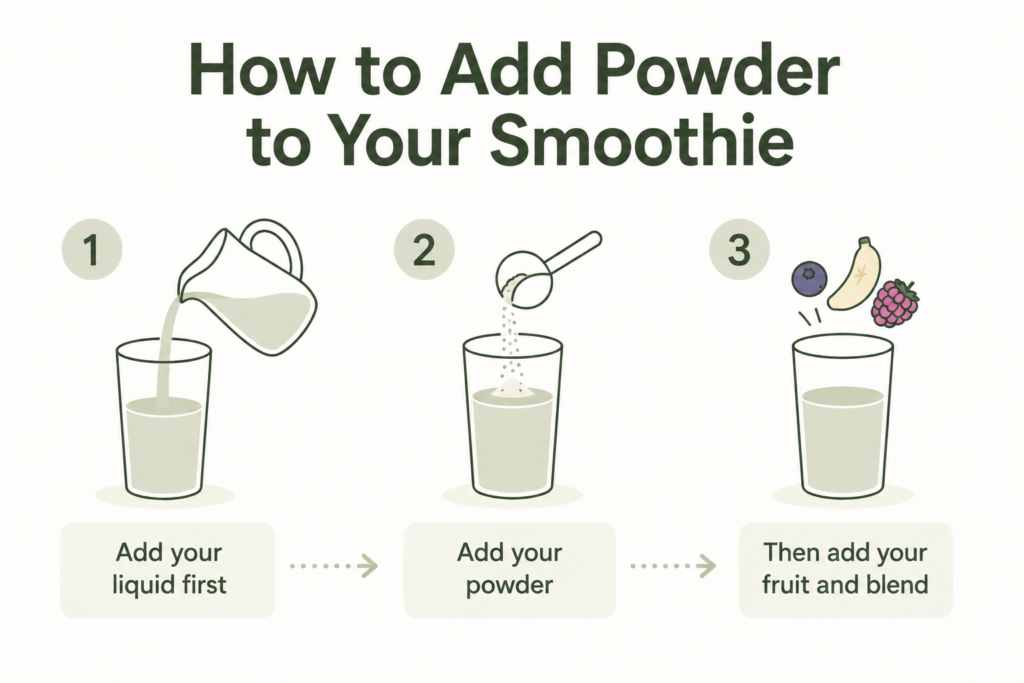
- Add the powder to your liquid first, before the frozen fruit or ice. This helps it dissolve properly and prevents dry clumps from sticking to the bottom of the blender.
- Taste before you adjust. Some protein powders are quite sweet on their own — you may find you need less fruit than usual to balance the flavour.
- Start with a small amount. If you’re new to greens or collagen powders especially, start with half a scoop and build up. Some people experience digestive changes when they introduce new supplements quickly.
- Store in a cool, dry place. Moisture is the enemy of all powder supplements — keep lids tightly sealed and avoid storing them near the hob or kettle.
One more thing worth saying: more expensive doesn’t always mean better. Myprotein’s Impact Whey and Rheal’s Clean Greens both outperform many products that cost three times as much. Check the ingredient list, look for clear labelling with actual doses rather than “proprietary blends,” and buy from established UK retailers rather than unrecognised websites.
Frequently Asked Questions
What’s the best powder to add to a smoothie for weight loss? Protein powder is the most useful addition if weight management is your goal — it increases satiety, meaning you’re less likely to be hungry again an hour later. Look for options with low added sugar and a protein content of at least 20g per serving. Greens powders can complement this but aren’t a weight loss product in themselves.
Can I mix collagen and protein powder together? Yes, you can combine them. They don’t interact negatively, and some people find this a convenient way to cover both bases in one smoothie. Just keep an eye on the total protein content — most people don’t need more than 30–40g of protein in a single sitting.
What does greens powder taste like in a smoothie? Most greens powders have an earthy, grassy taste that’s quite pronounced if you drink them with just water. Blended into a smoothie with banana, mango, apple, or pineapple, the flavour is much less noticeable. Sweeter fruits do a better job of masking the green taste than berries, which can clash with the earthiness.
Is it safe to have protein powder every day? For most healthy adults, yes. The main things to watch for are high added sugar content in flavoured powders, and — if you’re using whey — any digestive discomfort if you’re sensitive to dairy. People with kidney disease should speak to their doctor before regularly increasing protein intake through supplements.
When is the best time to have a powder supplement smoothie? There’s no single right answer, but most people find a protein or greens smoothie works well as breakfast or a mid-morning snack. If you’re using protein powder for post-workout recovery, within an hour or two of exercise is generally recommended, though the difference is less significant than it’s often made out to be.
The Short Version
If you’re just getting started and want to keep it simple: a good protein powder is the most useful addition to a daily smoothie for the majority of people. For UK shoppers, Myprotein Impact Whey (whey) or Huel Complete Protein (plant-based) are both solid choices that won’t break the budget. Everything else — greens, collagen, adaptogens — is a layer to add once you’ve got the basics right.
The best smoothie powder is the one you’ll actually use consistently. Buy small quantities first, see how you get on with the taste and how you feel, and adjust from there.
Looking for more ways to upgrade your smoothie routine? The Banana Apple Protein Smoothie is a great place to start if you’re new to protein smoothies. If you’re thinking about a blender upgrade to get the most out of your powders, our guide to the best smoothie blenders for every budget covers all the main options. And if you’re building your first smoothie habit, Starting With Smoothies walks you through everything you need to know.
Have a powder you swear by, or one you tried and abandoned? Share your experience in the comments — it’s always useful to hear what’s actually working for people.
Want recipes and new posts straight to your inbox? Sign up for The Smoothie Bird newsletter and we’ll send you the good stuff, no filler.


