High-Protein Smoothie Recipes: 10 Ways to Add Protein Without Powder
Not everyone reaching for a post-workout smoothie wants a scoop of powder in it. Maybe it’s the chalky aftertaste, maybe it’s the ingredient list you can’t pronounce, maybe your stomach just doesn’t agree with it. Whatever the reason, you can hit a genuinely high protein count using things already in your kitchen, and this guide shows you exactly how.
As an Amazon Associate, I earn from qualifying purchases and sometimes recommend products from other sellers at no extra cost to you. For more details see my disclosure policy and privacy policy.
🤔 Why Skip the Powder in the First Place?
Protein powder isn’t the enemy here, it’s just not for everyone. Some people find the texture gritty no matter how well they blend it, and some brands leave an artificial aftertaste that lingers through the whole glass.
Cost is a real factor too. A decent tub of protein powder isn’t cheap, and if you’re already buying Greek yogurt or peanut butter for other meals, you’re not spending anything extra to put them to work in a smoothie.
Digestive comfort matters as well. Whey-based powders in particular can cause bloating or discomfort for some people, and plant-based powders often bring their own texture issues. Whole foods tend to sit better, and they come with fibre, healthy fats and micronutrients that isolated protein powder doesn’t offer.
None of this means powder is inferior or unsafe, it’s simply a different route to the same goal. If you do want that route, our Best Smoothie Powder Supplements UK guide covers what’s worth buying. This guide is for everyone taking the whole-food path instead.
💪 10 Whole-Food Protein Add-Ins (With Real Numbers)
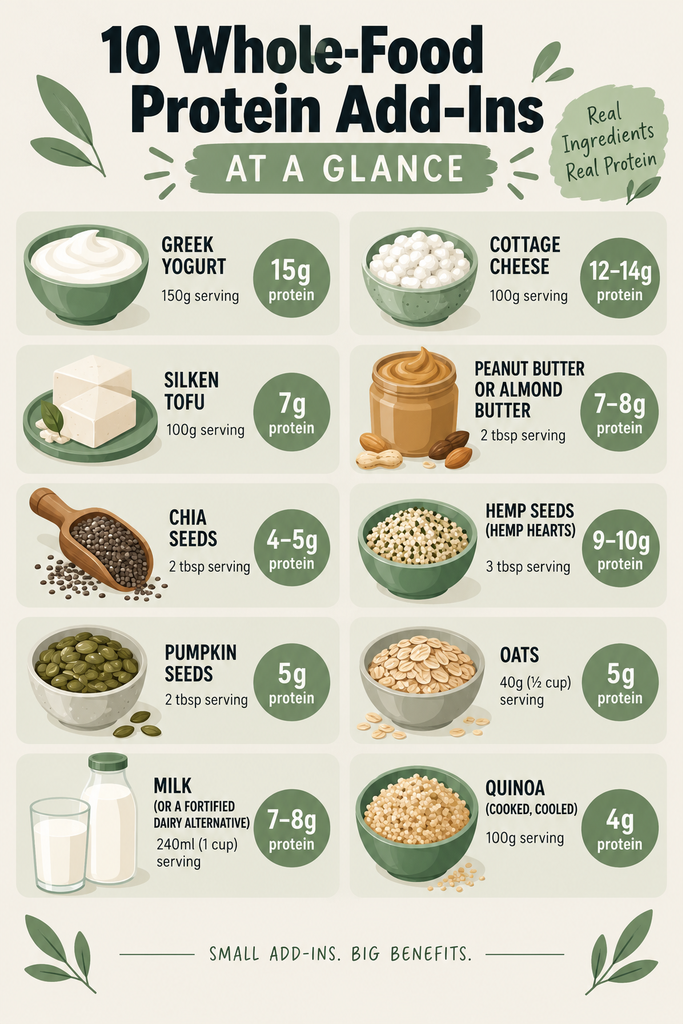
Here’s what to actually put in the blender, with an approximate protein count per serving so you can build a smoothie that hits your target rather than guessing.
- Greek yogurt – around 15g protein per 150g serving. Also adds thickness and a pleasant tang, so it works especially well in berry-based smoothies.
- Cottage cheese – around 12-14g protein per 100g. Blends completely smooth in a high-powered blender and is genuinely undetectable in flavour once mixed with fruit.
- Silken tofu – around 7g protein per 100g. Virtually flavourless and adds a creamy, milkshake-like texture without any tofu taste coming through.
- Peanut butter or almond butter – around 7-8g protein per 2 tablespoons. Adds richness and healthy fats, and pairs particularly well with banana and chocolate flavours.
- Chia seeds – around 4-5g protein per 2 tablespoons. They also thicken the smoothie as they sit, so add them a few minutes before blending or drinking.
- Hemp seeds (hemp hearts) – around 9-10g protein per 3 tablespoons, making them one of the strongest plant-based options on this list. Mild, nutty flavour that doesn’t need masking.
- Pumpkin seeds – around 5g protein per 2 tablespoons. Best blitzed first or bought pre-shelled, otherwise they can leave a slightly gritty texture.
- Oats – around 5g protein per 40g (half a cup) serving. Adds body and staying power, especially useful in breakfast smoothies.
- Milk or a fortified dairy alternative – around 7-8g protein per 240ml (1 cup). Swapping your liquid base from water or juice to milk is one of the easiest protein boosts there is.
- Quinoa (cooked, cooled) – around 4g protein per 100g. Sounds unusual in a smoothie, but a small spoonful blends in completely and adds a subtle nuttiness.
🥣 Combining Add-Ins Without Wrecking the Texture
The temptation once you know these numbers is to throw in four or five of them at once. Don’t. Stacking too many thick or fibrous ingredients together usually turns your smoothie into something closer to porridge than a drink.
A good rule of thumb is to pick two, or at most three, add-ins per smoothie, and to balance a thick one against a thinner one. Greek yogurt plus a tablespoon of nut butter works, because the yogurt is thick but the nut butter is only used in a small amount. Cottage cheese plus chia seeds does not work as well, because both thicken the drink significantly, and you’ll likely need to add extra liquid to compensate.
Flavour masking matters too. Silken tofu and cottage cheese are close to flavourless, so they slot into almost any combination. Hemp and pumpkin seeds have a more noticeable nutty edge, so they pair best with chocolate, banana or peanut butter rather than delicate fruits like berries, where the seed flavour can compete rather than complement.
📏 Getting to a Real Protein Target
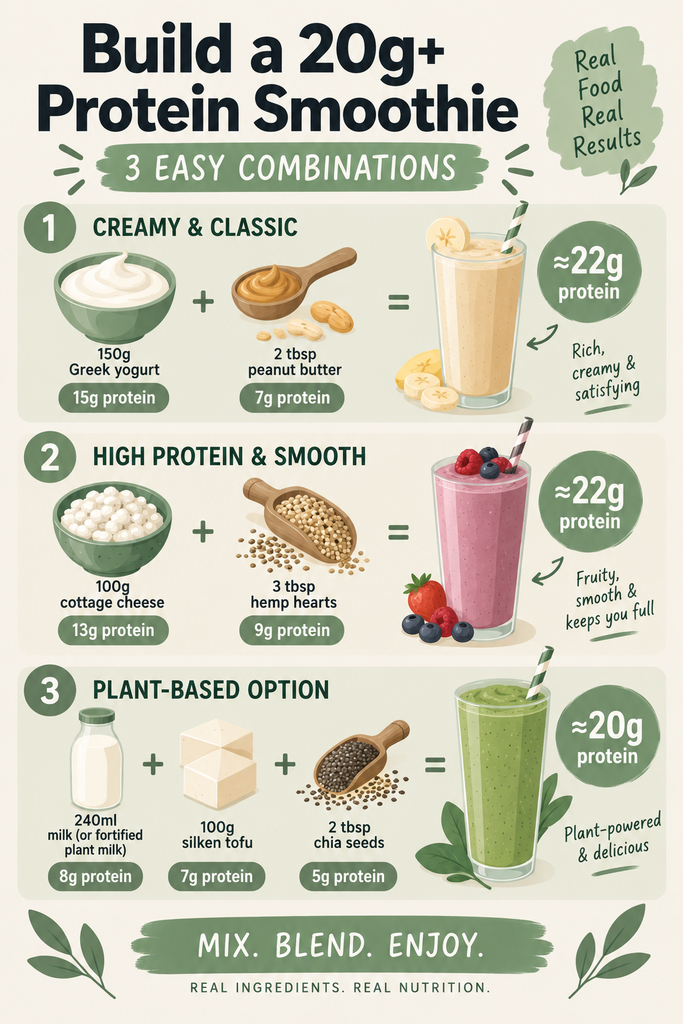
Most people aiming for a satisfying, meal-replacement-level smoothie should be looking at somewhere around 20-25g of protein per serving. Here’s roughly how that breaks down using the add-ins above:
- 150g Greek yogurt (15g) + 2 tbsp peanut butter (7g) = around 22g protein, plus your fruit and liquid base.
- 100g cottage cheese (13g) + 3 tbsp hemp hearts (9g) = around 22g protein, in a smoothie that stays smooth rather than gritty.
- 240ml milk (8g) + 100g silken tofu (7g) + 2 tbsp chia seeds (5g) = around 20g protein, entirely plant-based if you use a fortified plant milk.
None of these need a food scale to get right in practice. A heaped tablespoon of nut butter, a standard yogurt pot, or a splash of milk instead of water will get you close enough, especially once you’re making the same combination a few times and know what works for your taste.
It’s worth building your own go-to combination rather than chasing the exact highest-protein option every time. A smoothie you’ll actually make every morning at 22g protein beats one you make once at 30g and then abandon because it’s fiddly or doesn’t taste right. Start with one of the three examples above, adjust the sweetness or thickness to your liking over a few attempts, and treat that as your default from then on.
🧊 Prepping Ahead So This Actually Becomes a Habit
The whole-food approach only sticks long-term if it’s not more effort than scooping powder into a glass. A bit of prep on a quiet afternoon makes weekday smoothies just as fast as the powder version.
Portion out smoothie packs in advance: frozen fruit, a spoonful of nut butter, and a measured scoop of seeds, all bagged together and ready to tip straight into the blender. A set of good reusable freezer bags makes this genuinely low-effort, and it also keeps nut butter or yogurt portions from freezing into one solid block with the fruit.
It’s also worth being honest about your blender. Whole ingredients like frozen cottage cheese, whole seeds and nut butter need more power to break down completely than a smooth powder ever does, which dissolves with barely any effort at all. If you’re regularly left with gritty bits of seed or unblended lumps of nut butter at the bottom of the glass, it’s usually the blender struggling rather than your technique, and a proper high-powered blender makes a genuinely noticeable difference to the final texture.
🍌 Recipes That Already Use This Approach
You don’t have to build these combinations from scratch every time. A few existing recipes on the blog are built around exactly this whole-food approach, worth trying as a starting point:
- Banana Apple Protein Smoothie leans on yogurt and nut butter for its protein base.
- Triple Berry Protein Smoothie uses chia seeds alongside Greek yogurt, a good example of the “thick plus thin” pairing above.
Both are a solid way to see the ratios in action before building your own combinations.
❓ Common Questions
Can I really get enough protein without powder? Yes. Combining two or three of the add-ins above regularly gets you into the 20g-plus range per smoothie, which is a genuinely useful amount for a post-workout drink or a protein-forward breakfast.
Will these add-ins make my smoothie taste different? Some will, some won’t. Silken tofu, cottage cheese and milk are close to flavourless once blended. Nut butters, hemp seeds and pumpkin seeds all bring their own flavour, so build combinations around fruits that complement rather than fight them, like banana or chocolate with nuttier add-ins.
Is whole-food protein better than powder? Neither is objectively better, they’re just different tools. Whole foods bring fibre and other nutrients alongside the protein, while powder is more concentrated and convenient if you’re short on time. Use whichever fits your kitchen and your schedule.
Do I need a special blender for this? Not a special one, but a reasonably powerful one helps. Seeds, frozen cottage cheese and nut butter all take more work to fully break down than a smooth powder does, so if your smoothies are coming out gritty or lumpy, upgrading your blender will usually fix it faster than changing your ingredients will.
Can I make these ahead and store them? Yes, within reason. The dry add-ins (seeds, oats) and portioned fruit freeze and store well in advance. Once blended with yogurt, tofu or milk, though, a smoothie is best drunk within a day, since the texture and taste both hold up noticeably better fresh than after a couple of days in the fridge.
🎯 The Takeaway
You don’t need a tub of powder to make a smoothie that actually keeps you full and supports your training. Pick two or three add-ins from the list above, balance a thick one against a thinner one, and you’ll land a genuinely high-protein smoothie using things you probably already have in the fridge.


